Journal
the genesis of color
October 19, 2026 | 2 min read
no fixed rule
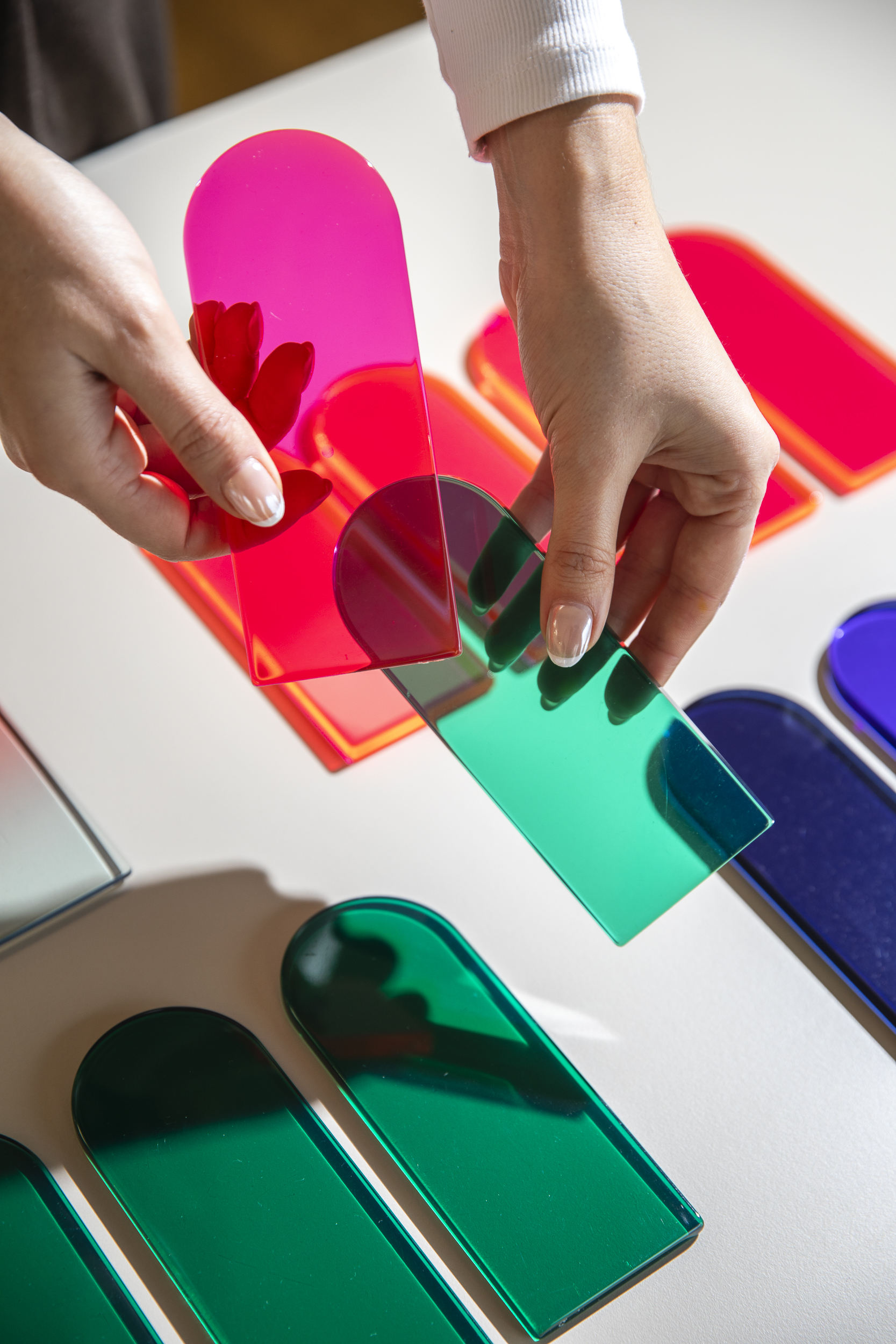
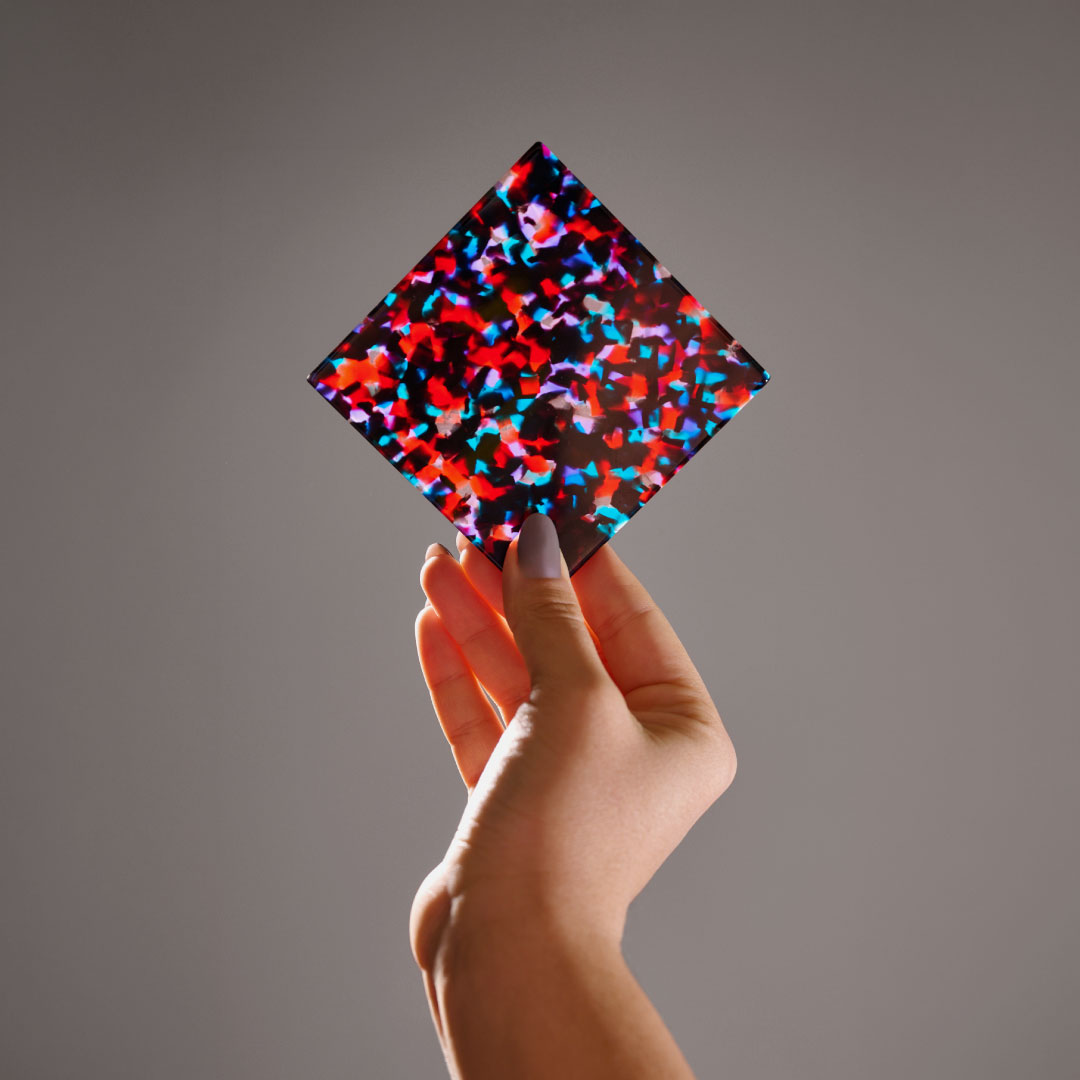
Sometimes a color starts with something that stopped us: an exhibition, a photograph, a painting. Sometimes it starts with the material: we layer it, carve it on the milling machine and see what the light does. Other times we go to our archive, chips of every color, block and pattern we've made in acetate, and try them side by side until a combination works. Whatever the starting point, we keep the model in mind, and we want colors that are bold but never loud.
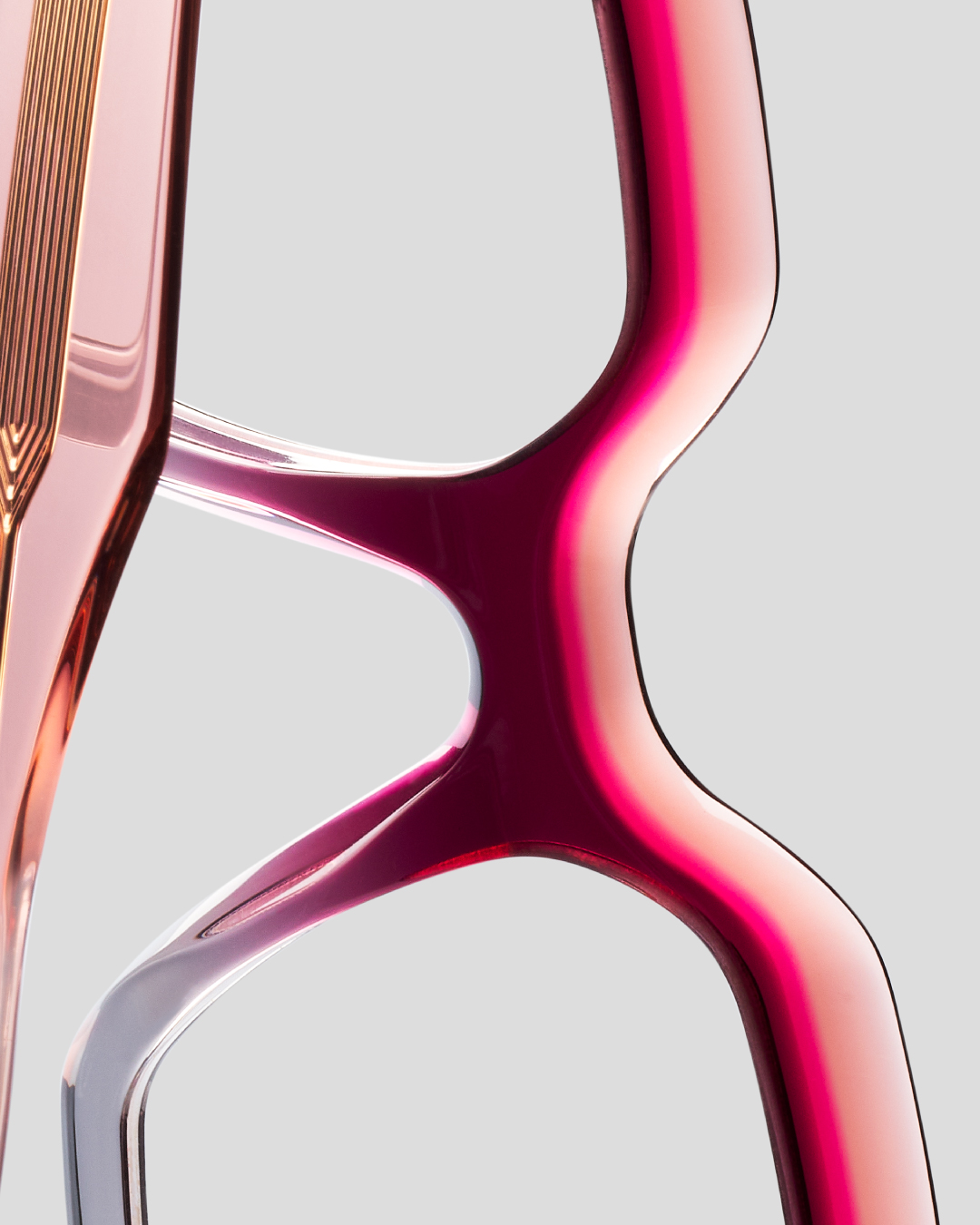
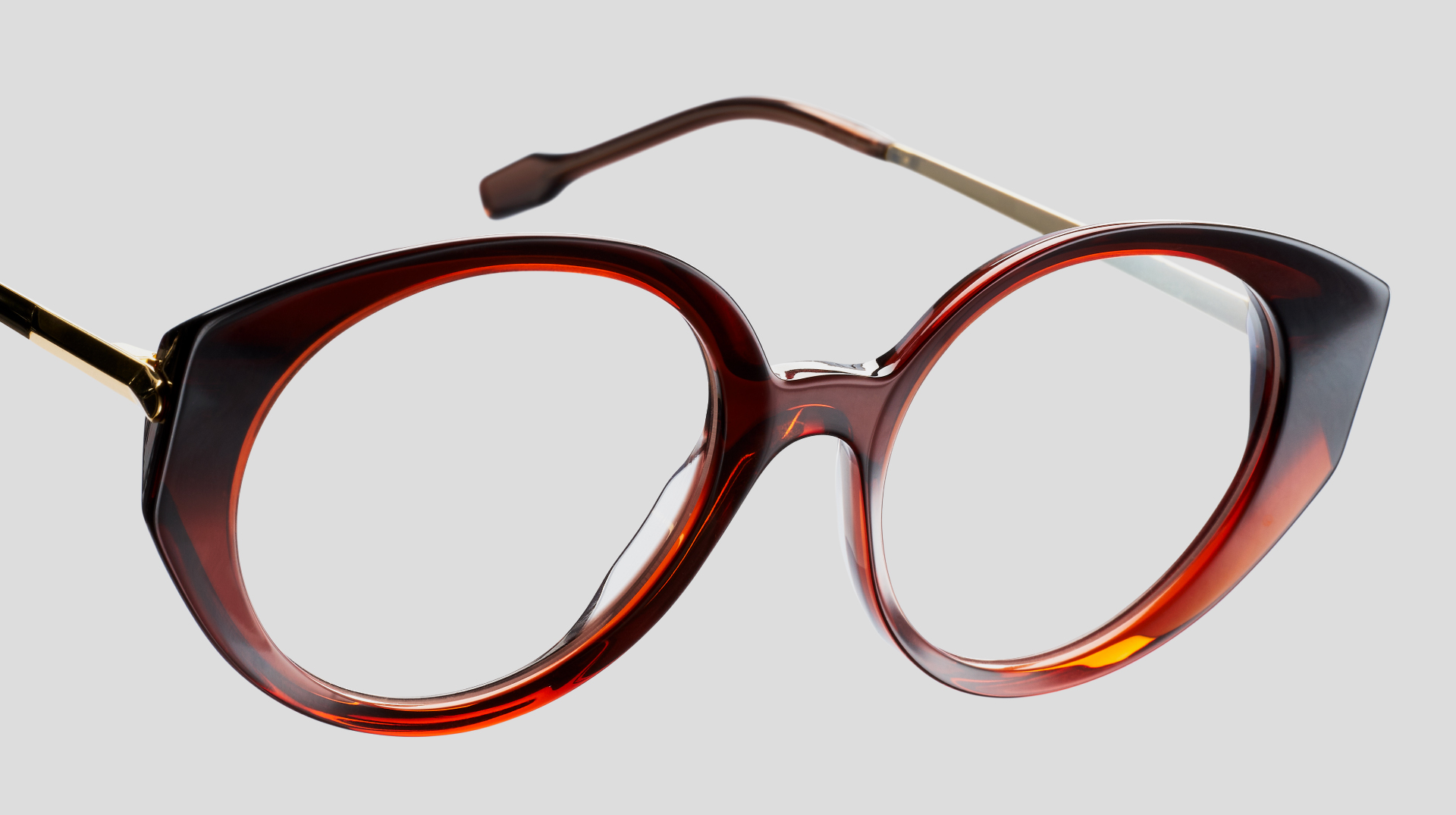
Custom acetate requires physical exploration beyond standard flat color palettes. Layered custom sheets bring out the facets of a frame front. From CNC cutting to hand polishing, each step takes the material further, until the color shows all its depth in the finished frame.

one color, many colors
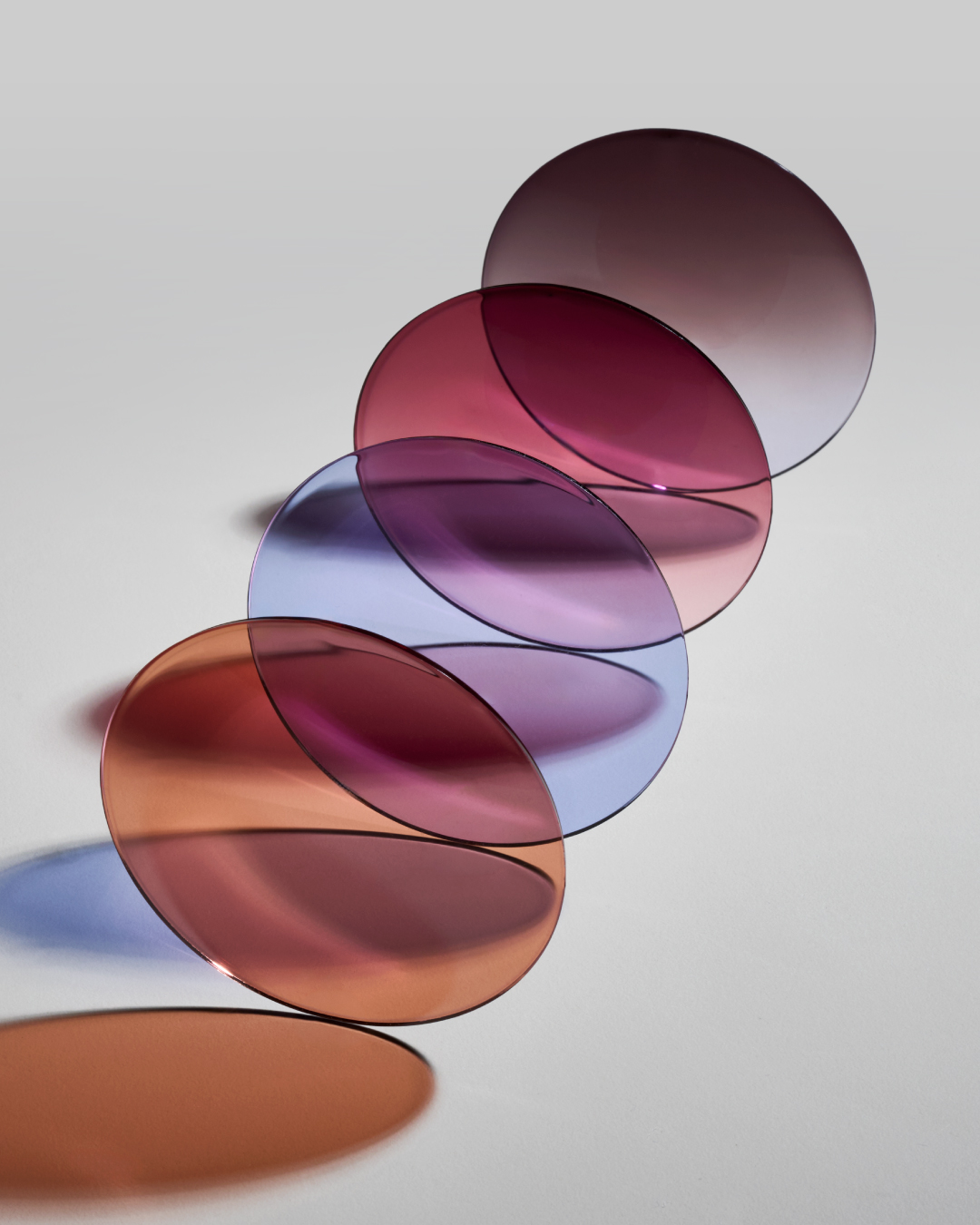
A color only shows what it is once it becomes a frame. Pantone gets us started, but it describes a surface, and acetate is a volume. The same acetate reads differently thin or thick, faceted or in one solid piece. Two transparent greens can look great side by side and lose their contrast once bonded, because parts of a front can be just 2 mm thick.
Light does the rest: change the lighting and you change the color. Even the distance from the skin matters. Where the frame sits close to the face, the color darkens. Where it stands away, or catches light from behind, it lifts and finds other shades. That's why we test a new color against the skin and under different lights before we decide.
Custom materials give us full design freedom. By controlling color layering and textures, we turn raw cellulose into frames that interact with light in specific ways, with patterns you won't find from any other brand.
Color has been getting us to the workshop every morning since 2012, and it still surprises us.